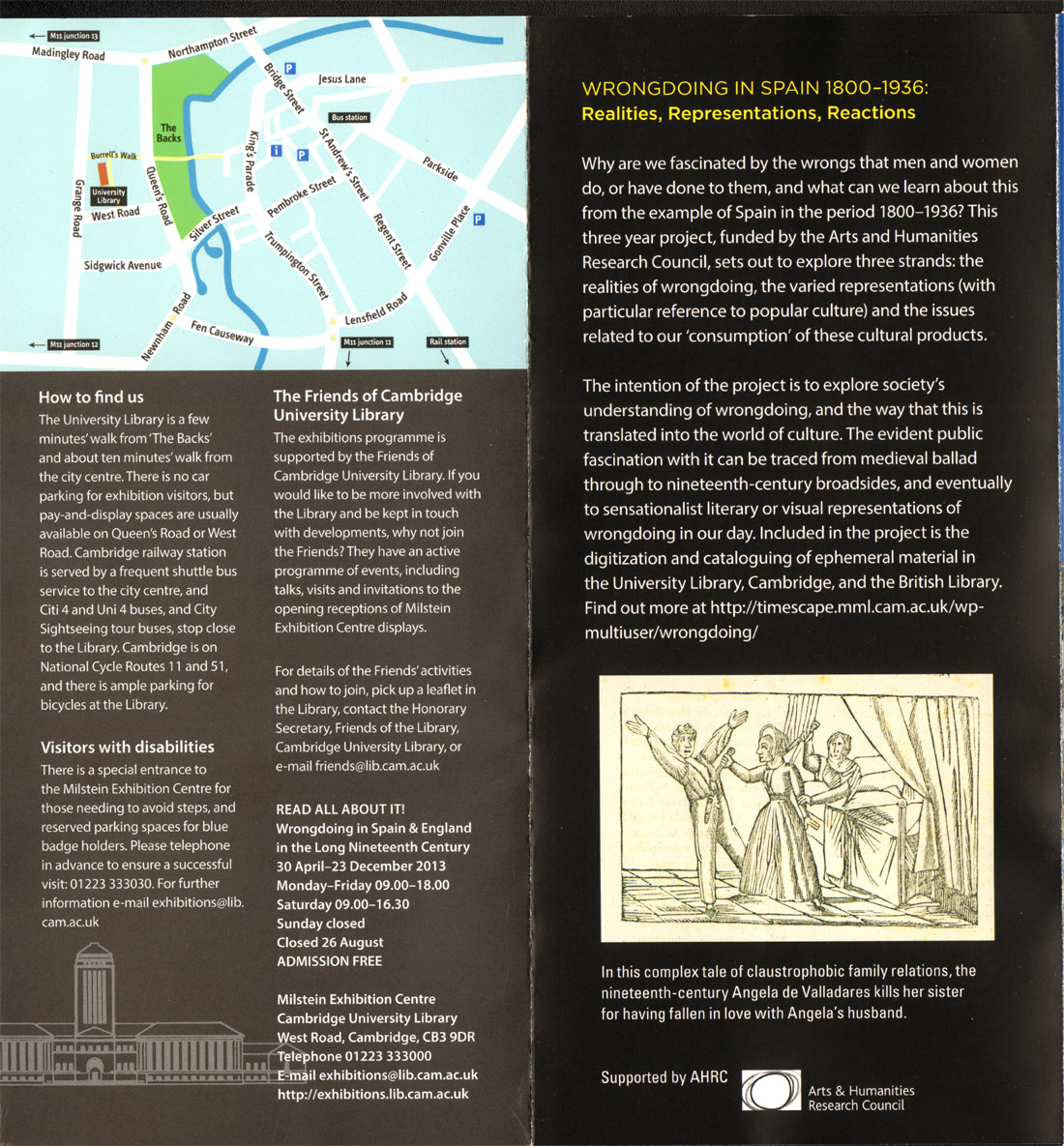
Purely by chance, I picked up a leaflet for an exhibition called "Wrongdoing in Spain and England in the Long Ninteenth Century" while waiting for a bus one day. It was an exhibiton focused around sensationalised crime reporting in the 18th and 19th centuries, in Britain (and one item from the USA) and Spain. The leaflet mentioned the magic word "chapbook", which were small, cheap books sold by wandering pedlars. As steam-driven presses and railways improved distribution, chapbooks evolved into the more regular "Penny Dreadfuls", sold in newsagents and bookshops.
One of the earliest penny dreadfuls was The Newgate Calendar, a series of magazines or pamphlets with lurid biographies of criminals who were being hanged. Though it was "factual", no doubt many of the details were heavily exaggerated, if not simply invented. Of course, later Penny Dreadfuls featured real-life criminals such as Dick Turpin or Charles Peace, in almost entirely fictional stories. So, though this exhibiton is intended more as a look at the origins of tabloid newspapers, it's just as relevant to the origins of British comics!
The exhibition was held at Cambridge University Library from April to December 2013. In went on a balmy August day... by British standards, anyway. I'd probably find it pretty mild, these days!
 –
– 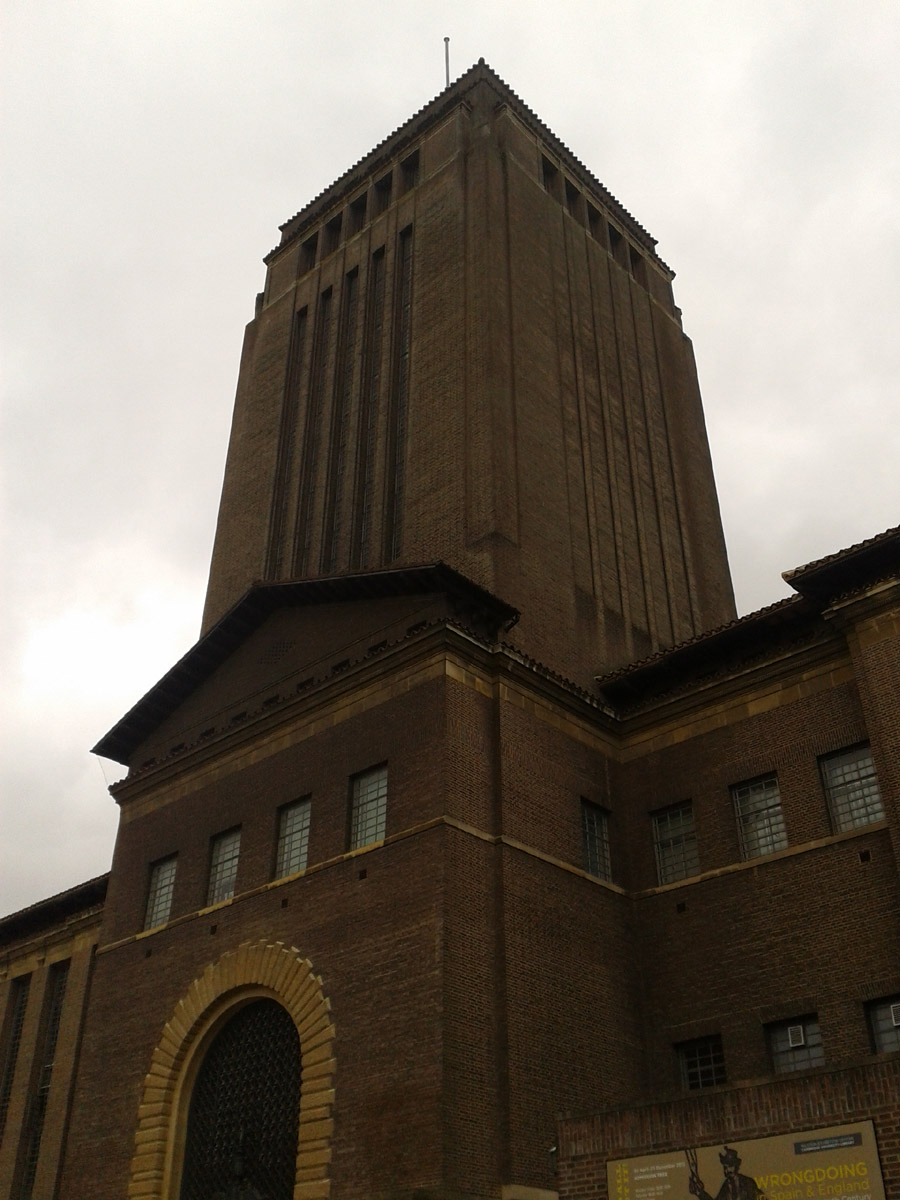
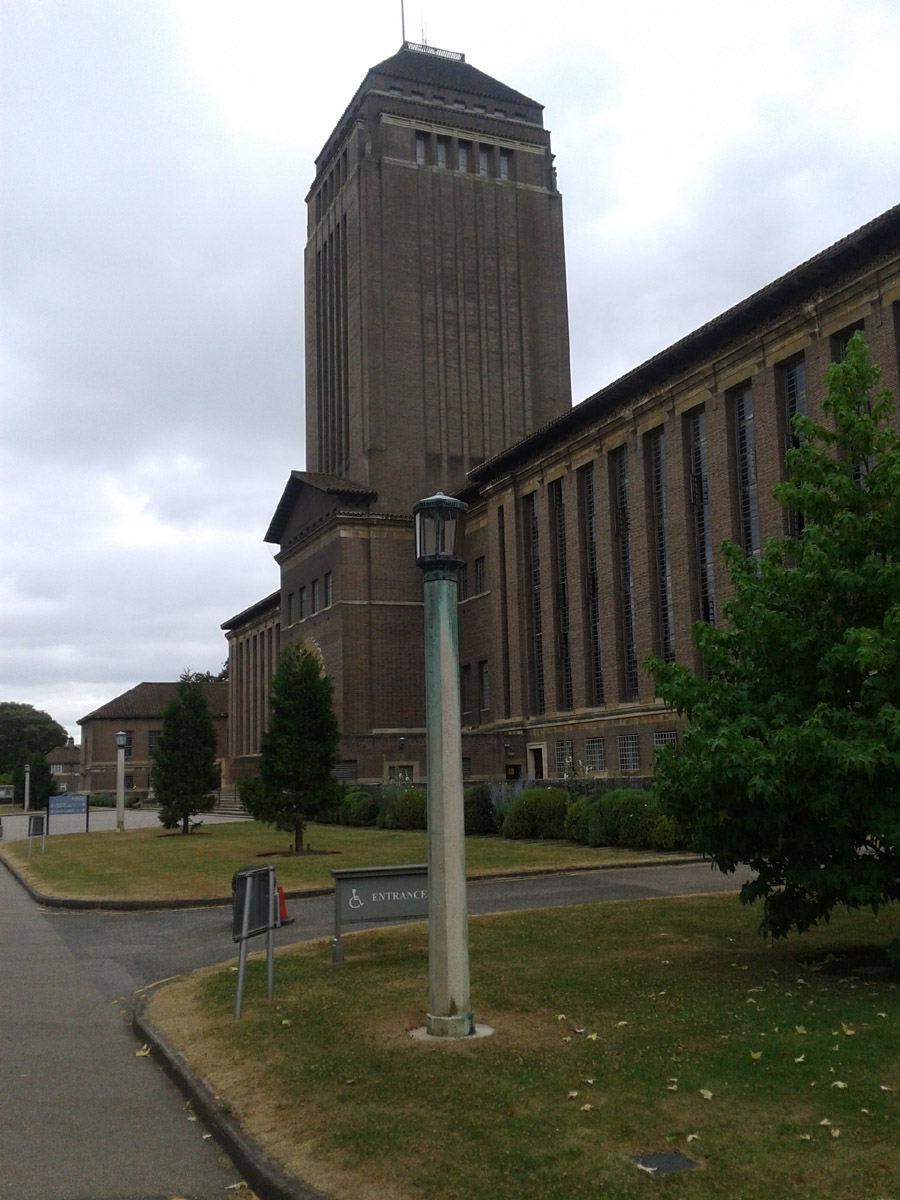
It was the first time I'd been to the University Library, and it's a pretty imposing building up close. But then again, some stupid by-law says that the library tower must always be the tallest building in Cambridge. That might have been alright when it was built, but in these days of a housing crisis it's absolute madness. Just think, the great minds of Cambridge must have helped to build the Empire, that vastly wasteful endeavour to "civilise the barbarians". Barbarians living in places like Hong Kong:

Malaysia:

And Singapore:
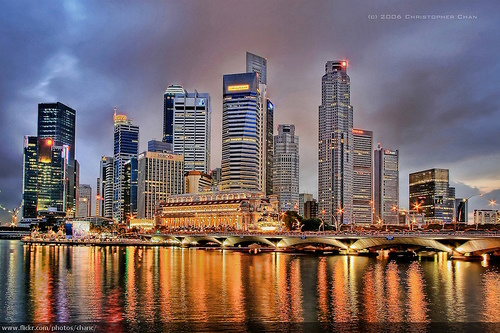
Yeah, just look at those places, and now look at this jumped-up mud hut:
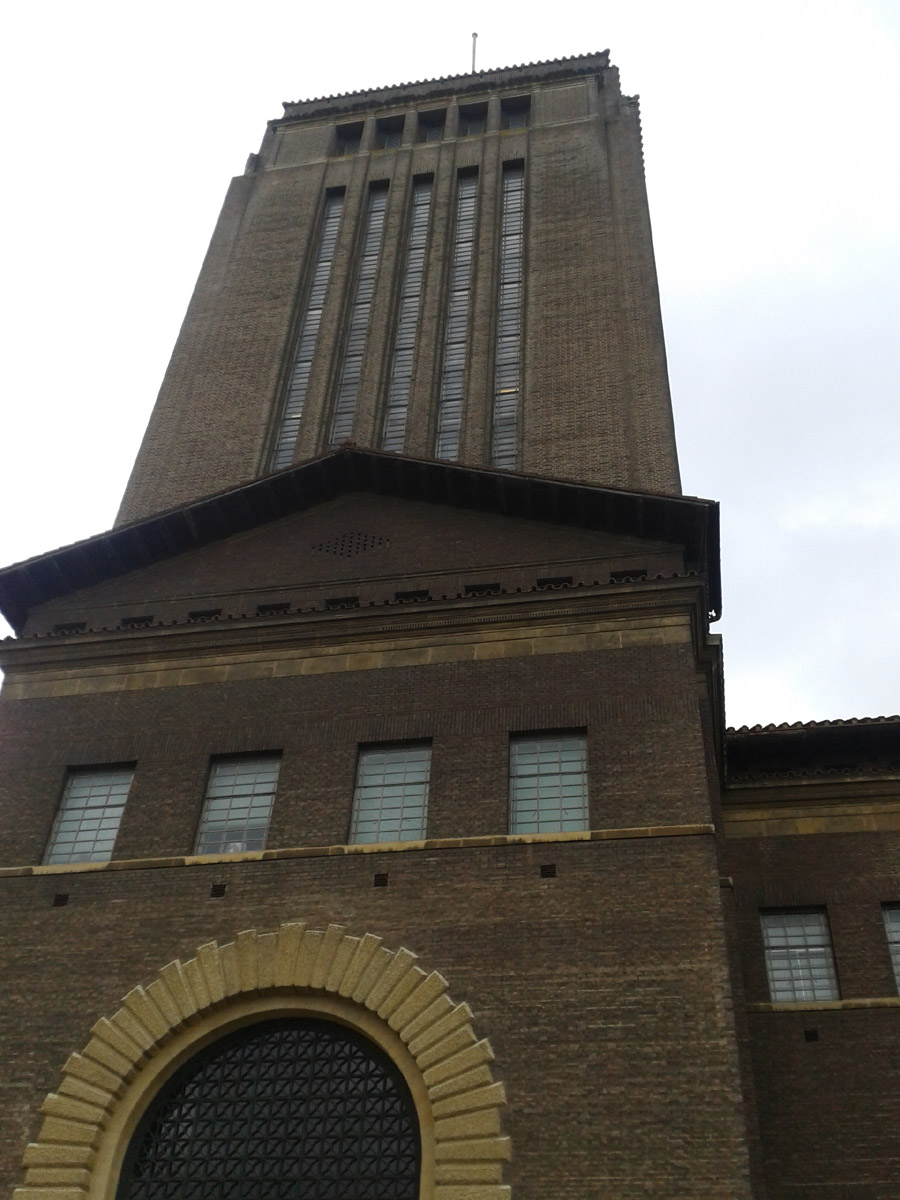 –
– 
It's even got narrow windows for chucking spears out of.
Maybe the "barbarians" need to come and civilise us.
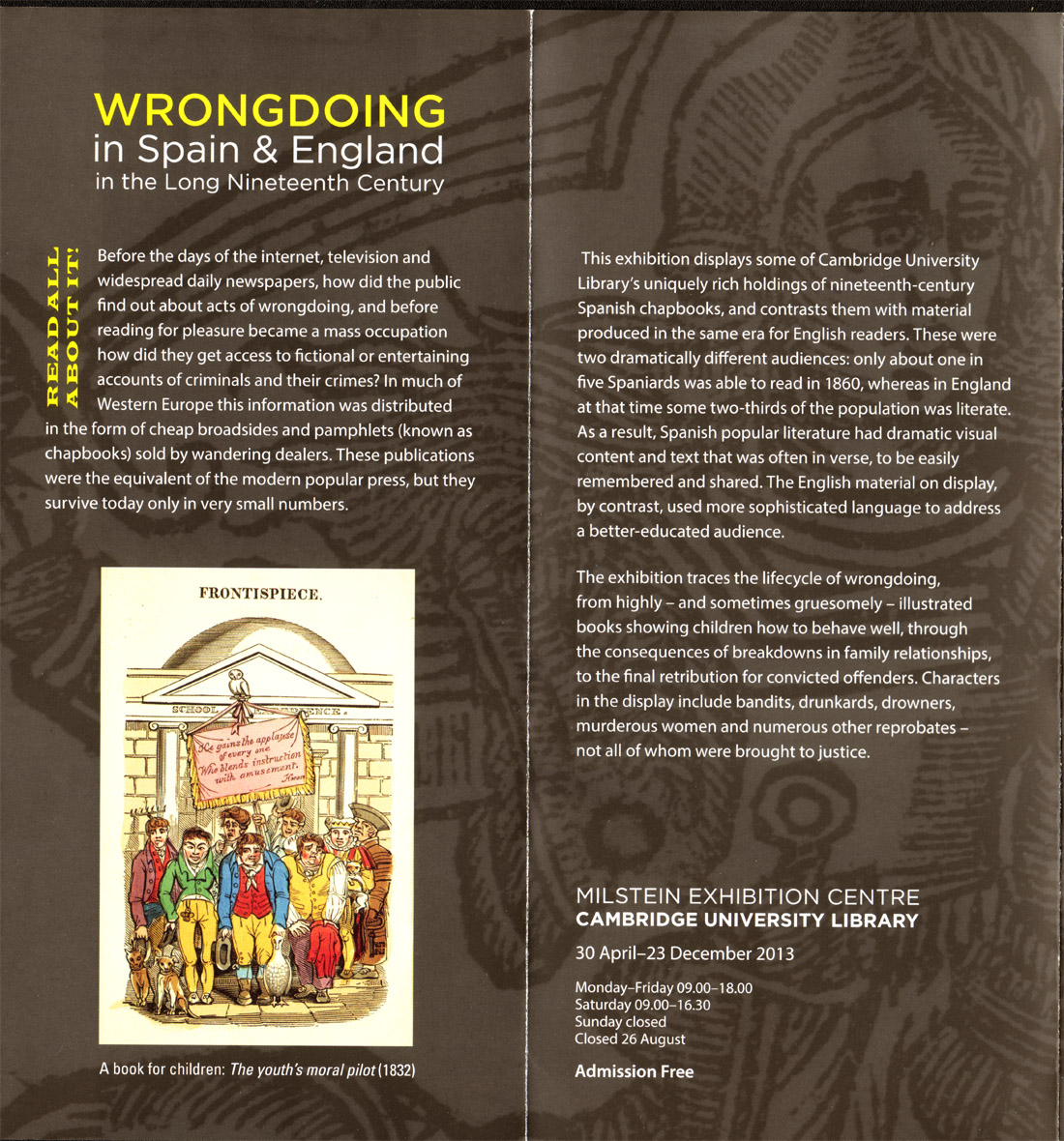
Anyway, the exhibition itself was held in a small room off to one side of the entrance hall (you don't need a university ID card to get into that part). It's arranged by theme, rather than by age – the themes including "moral guidance" (stories for children showing the consequences of a life of crime), "weapons" (one Spanish publication featuring giant scissors!), "monsters" and, of course "news reporting".

Photos were prohibited inside, so here's the scanned leaflet instead
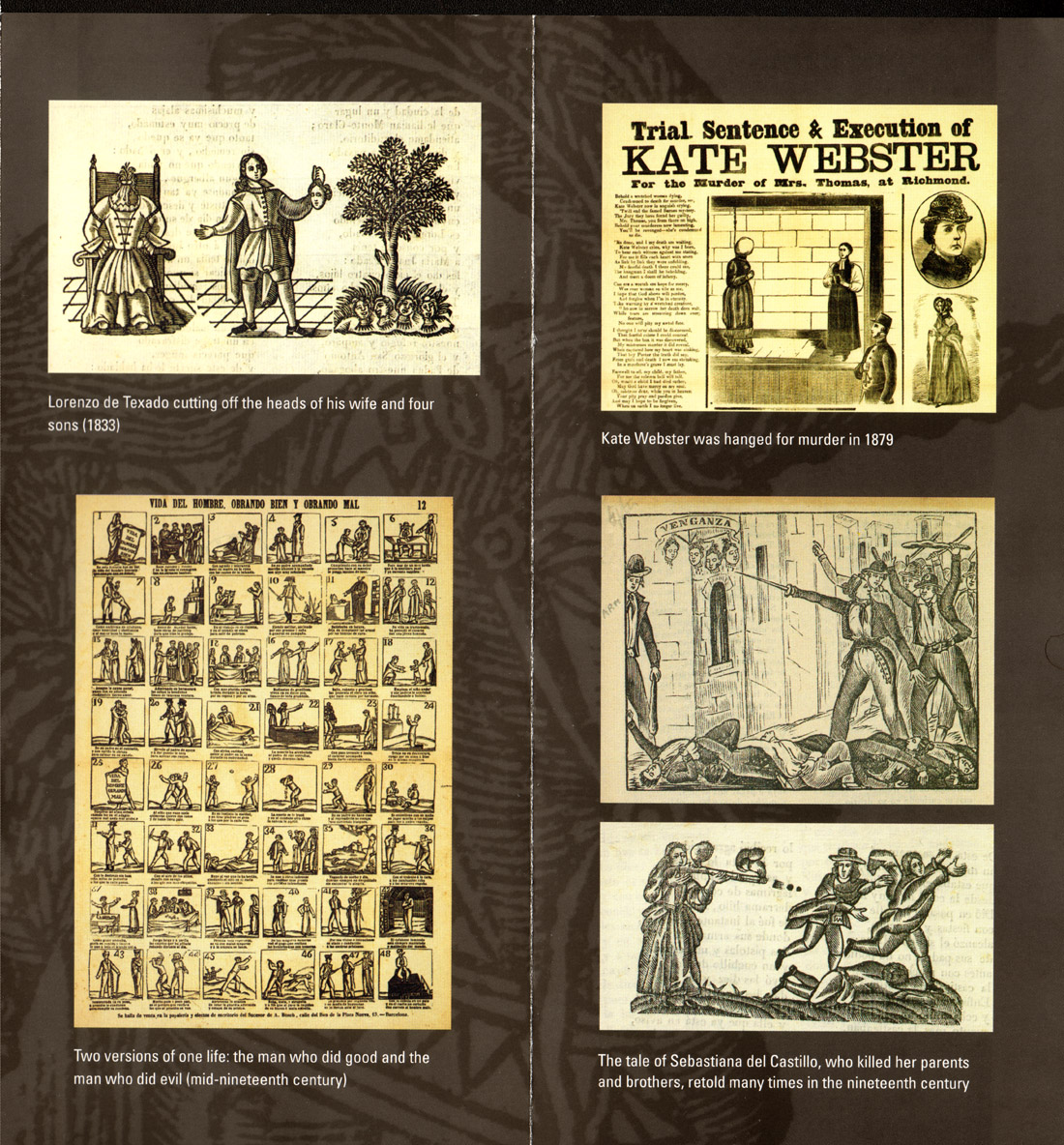
At the time, Spain was less literate than the UK, so their moral guidance, and re-telling of famous crime stories, was in the form of a series of small illustrations with simple verses underneath. These were called Aleluya, though now that I look on Wikipedia, apparently the English translation is Auca, and they're mainly a Catalan thing(?). Anyway, their influence on later comic strips is clear (indeed, take away the narrative stories at the sides of Rupert strips, and you basically have Aleluya!). A lot of them were on large, single broadsheets and told two stories – one of virtue, which ends up with an old man being respected by all, and about to ascend to heaven, and one of vice, which end with a comparitively young man comitting suicide under a bridge, surrounded by empty bottles. There was also one US-made “Aleluya”, from Kansas, which is in colour! (albiet very bright, high-contrast colours).
The British side of the exhibion was more varied, featuring Chapbooks for children (some of them are very small, smaller than A6 size, and only about 8-12 pages of thin newsprint, no wonder so few have survived!), handbills giving details of wanted criminals and upcoming hangings, and penny dreadfuls. The section for monsters included a bound volume of Varney the Vampyre (incredibly rare – though you can buy the story as a modern paperback, it doesn't include the illustrations!). There was also an Aldine Library from the 1880s, and a 6d pocket book in a similar format to the Sexton Blake Library (though it's cover design and 6d price implies it's from the 1930's, the very long 19th century!).
(2026note: Obsolete section follows!) If you can get there, this exhibition is well worth seeing. It’s quite small (you should be able to see it all inside an hour) but packs a lot in. It’s running until the 23rd of December. I was a bit annoyed to discover that there's no big coffee table book to accompany it. Apparently the Spanish material is it's main focus, and it's linked to a project being run by the Department of Spanish and Portugese Studies. Maybe one day they will write up all their findings from both sets of stuff, and publish that. I beleive a book related to just the Spanish side of things has already come out... I may have to troll down the Cambridge University Press shop and see if I can find it! (2026note: I don't remember if I ever did, now!)